Start
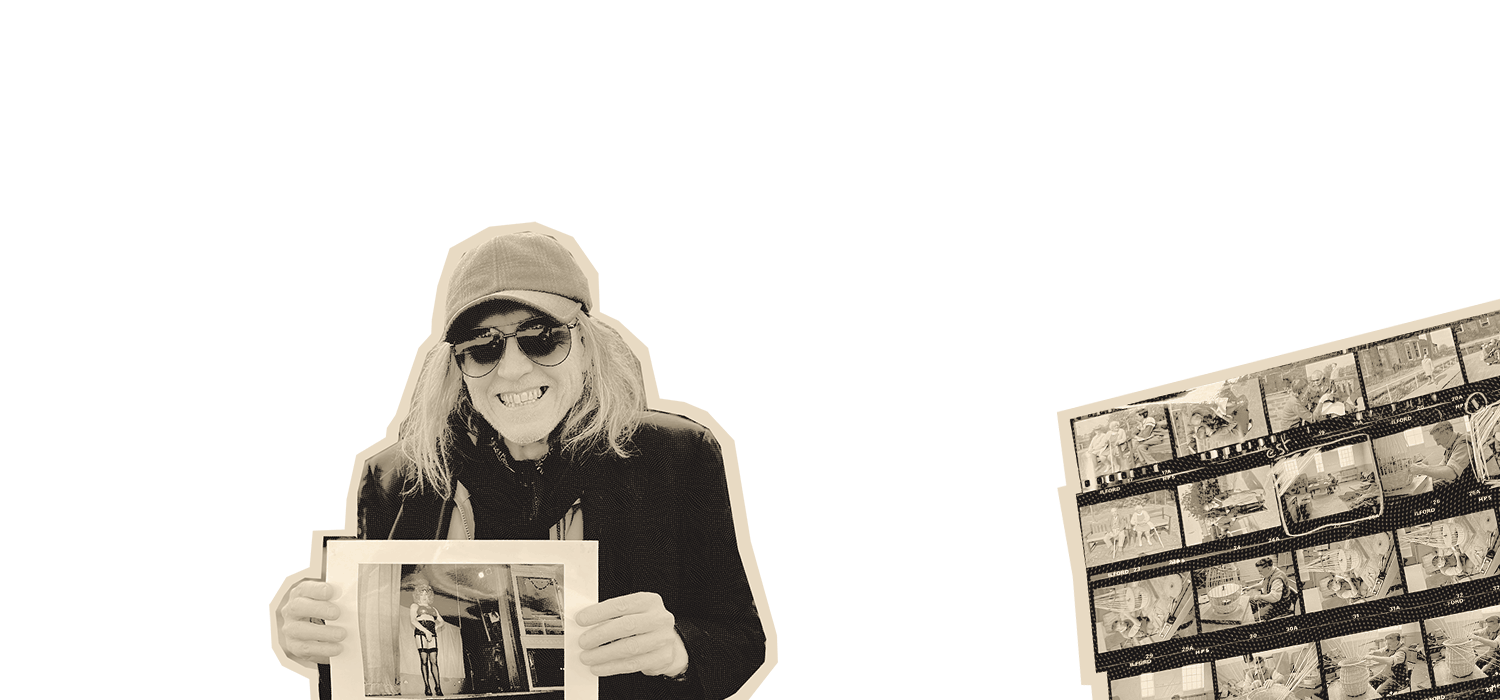
Kate Genever: This is Kate Genever recording Brett Hambling on June the 2nd 2025 for the Scene but not Heard project we are in the backroom of Rayners Pub.
Okay so now that’s going we can just ignore that.
So Brett what have you…
What have we got here?
What are we…
Brett Hambling: Yeah I’ll show you what we’re looking at.
Kate: So tell us first of all tell us why you were photographing.
Brett: Well I think for me I just wanted to…
I bought the photo journalist book so I just wanted to take good photo journalist photos really. What I’d seen in books I thought, oh I’ll have a go at that and I thought like that’s quite a nice way to make a living just wandering around photographing people and meeting people really. So that was really it.
So there wasn’t really any big plan or… you know I come from a fine art background, so I was used to concepts and things… with photography there was no real concepts, except to photograph life. So that’s sort of what I was doing really.
I don’t think I had a…
Well really you would say that it was working class life. You see I never really went any further than working class environments from a working class background so I photographed working class life.
I couldn’t say that I’d photographed every element of life besides like… like film directors and things like that who were like in a different world you know the film world, but with mostly the on the streets and the stories I did you would say it was working class people that I photographed.
So there maybe was an agenda to capture the working class.
It started as working class of work and moved to working class of play.
So that was the… and there was a bit of play at the beginning too with… that was the earliest one that one I told you about the hairdresser cutting the hair. So that was really early. These were two of the earliest ones I did where I was playing around with like they’re you know focusing in.
Kate: And so where were these taken?
Brett: This was our local barbers on… near the Rosedale chip shop which was on Spring Bank West.
Kate: And and how many… what, you just spent a day?
Brett: Yeah I knew I knew the guy you see so I just went in and said could I take a few photographs he goes yeah I’ve got a chair if you want you could stand on it and photograph me from above and that’s how I got the photo you see because I was above him on a chair… because he knew me, he cut my hair you see. So you see… I can’t remember too much about him, but he was like a bit of a rocker, I think you know he’s got a beard and had longish hair.
And apparently my friend said…
Kate: What year is this?
Brett: This one would be 1982.
So… and my friend said that when you used to go there it’s a “anything for the evening fellas” and he’d have condoms at the side. So like “anything for the evening sir.” Which I thought was quite funny, so they were some of the early pictures and then this was the pub that I did you see, so that’s the landlord of the pub…
Kate: Which was… what was the pub..
Brett: The Plimsoll ship it was called and it was on Cleveland Street or just… Holderness road.
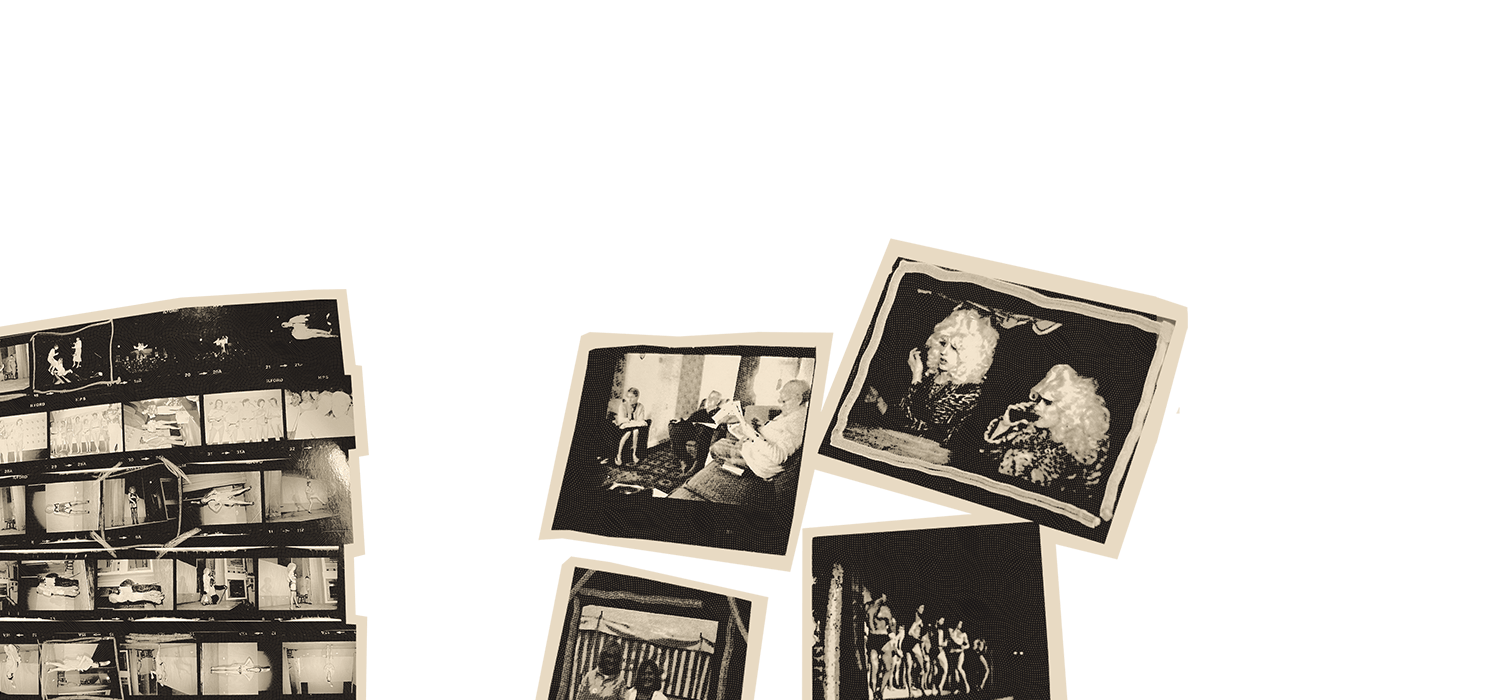
These are some of the prints I’ve found, they’re not the pictures that are going to be in the exhibition by the way there’s a better… that one might be… there’s better pictures but these are the ones I printed at the time. So these are the prints from 1983 I think or something like that. They’re the same time as Russell’s pictures of Rayners.
Kate: And what was what was your connection to the Plimsoll?
Brett: Well basically we used to- on a Friday night we used to go to Spiders, which was a nightclub it was an alternative nightclub they did… umm..
Kate: Spring bank? Oh, no…
Brett: Cleveland Street yeah George went there George Norris and people at that. And it was quite a cool place, the drinks were cheap and it was young people that were sort of indie and before that had been new romantics and punk. So we used to go to that nightclub and we’d have a pub crawl before and we ended up in this pub and umm they were on the piano and everything, all these old people I said umm Darren I’ve got to come back with the camera next week. He said that’s all right I’ll go to Spiders early, you take the photos of the pub and we’ll meet in Spiders. So I used to go here, take the photographs of them on the piano, you can’t see the piano but there’s a piano at the back here, and they’d be singing and drinking and it was more nightlife of an older era really and so… so I took the photos.
I think I spent about four weeks doing it so… taking the pictures and these were early prints you see they’re a little bit contrasty and they’re not paying in or anything it’s before I became good at printing but they might be interesting to having one of the cabinets some of them to show people original prints you know that’s a better print that was done a bit later so that’s got all the tones and everything. This one of Billy Berry that’s the only print in existence at the moment and it’s a bit messed up but a lot of people like this one. He was a local character, a bit of a well, he wouldn’t say he was an homeless person that lived on the streets… a street person.
Kate: They called them tramps then.
Brett: Yeah he was a hell of a character he had a stick and he’d attack people and stuff and he was always drinking… well he was drinking Carlsberg but it’s a Heineken advert and he’s got the same cigarette that’s in mouth and the same cap as Andy Cap who’s selling Heineken, so I was cycling to college and saw it, jumped off the bike and ran to him and he wanted, demanded, money so I had to give him some money and then he’d let me photograph him and I got that picture.
Russell Boyce loved the photo so he said “I wish I’d taken a picture like that” it was one of the first really good pictures I took, I think. Yeah it was about 83 I think somewhere like that.
Kate: So where were you in 80? Had you finished at…
Brett: I was doing a foundation course in art which was at Wincolmlee and Wincolmlee was just round the corner from the Plimsoll ship you see, so that’s why I knew it as well, but nobody in the college went to the pub, it was an old-person’s pub. I don’t know where those students, I don’t think we went to any pubs you know with that crew.
Kate: But had you got a family history of going into those sort of pubs like what was it about the plimsoll like do you remember…
Brett: No it was it was, it was because of the piano really. Oh I’d been in pubs like this before but my mum and dad went in Working Men’s Clubs and they went out to dinner dances because my dad was a rugby player and they went to the pub but they weren’t like it wasn’t the same as this type of pub. This was because I could see it was the last of its type, the piano and a mic I knew that was gonna go. (7 min 30 seconds)
It was the only one I’d come across in Hull so I ‘an’t seen any pianos left in a pub so it had been every pub had a piano this one ‘ad a piano back in the day because everybody had sing songs so so so that was the reasoning really- the music the piano so- pubs I was used to pubs I’d been in this pub when I was a little boy because my granddad worked off Hessle Road in an abottoir and all my uncles came in here so I’d been in here when I was a little toddler they were fishermen my granddad my uncles and so I was aware of the pub environments they used to go in the Mermaid which was on Anlaby Road the Boothferry Estate and I gathered that it was free and easy because the music came on and they let me do what I like I could dance drink whiskey mess around they let me do what I want whereas everywhere else I got told off you see to be quiet because I was a bit hyperactive and liked to be a bit of an exhibitionist so I found pubs in for all and you see because I could get away with murder in a pub I could jump on the table and dance I could do what I wanted so I love pubs you see so, hence taking the photos of that pub was very easy for me because I was used to pubs and I was a drinker all my family were drinkers so so you know it was something to do you know so that was an early I think the earliest thing I did though
Kate: But you- I’m just interested in the drinking because it does have a there is a big culture history culture of drinking in this area
Brett: Yeah well if you think about it through the fishing industry you got this, this heightened, heightened awareness of life and death because they’re gonna wait to see they could die so they drank heavily when they came home you know they were home for a few weeks and they drank heavily. Well I grew up with all that that of fishermen in the family and so it was very exciting but it want typical when I went to London or to Newport they drink drink like us this time was very heavy for alcohol people drank heavily here whereas you went other places they would didn’t drink like us, they saw me drinking they were like what you doing Brett and I said well this is what I do I drink like this with all my friends. I learned to try and be a bit more civilized about it because I was used to just downing a pint and getting on to the next place you see what I mean because we were brought up in this culture of drinking heavily you know so and I did drink heavily you know when I was younger so so I think it was to do with the precariousness of the fishing
Kate: And having a good time and having a good time?
Brett: oh yeah well they had a lot of money to spend but they were worried that they could die at any point so they came home and just lived their best life and had a party a bigger party than a normal person would no person a weekend living oh yeah I enjoy myself but these people were more because of the fact that they were going away to sea and people did at sea they came home and they were extreme partiers they really did know how to party so I grew up with all that and I think it influenced me I was like them, so Iwas a wild thing myself you know but I hadn’t been to sea or anything I just got off the vibe you know I like this it’s exciting you know so
Kate: But I guess it gave you access to places and people
Brett: Yeah I think I think in the 80s particularly when I was taking photographs everybody was drinking but I noticed that some there was a change in environment happening with tobacco and alcohol but the 80s were the last of the big drinkers and I was part of that really yeah
Kate: And at the same time there were acts on and singers do you remember that or do you- were you interested more in the music?
Brett: Well I think I didn’t come to purpose to see acts very much it wasn’t my scene. I was a I was interested in pop music so and I had an interest big interest in pop music and DJing so I wanted to be places where there was good DJs so beer it [Pub name 12 min 14] was okay when I first started going out in the 80’s and was a couple of other places but mostly the DJs were loved a much and I was practicing myself DJingand I didn’t want to see just acts. It was a shame really I should have gone and seen some of these acts in the bars but I was a bit elitist I wanted to see the top pop stars and ones that nobody had ever heard of so you know being cool you know like if somebody said what you into I’d say Echo and the Bunny Men and Teardrop Explodes which I really was you know, I had all the records but nobody knew who they were certainly in 1981 or so when I first went out drinking because it was before they became household names you know
Kate: But do you think the family and the people that you were out drinking with they were in the pub just the pub culture I guess.
Brett: Yeah they would have been into that in a big way yeah they liked acts, comedians and yeah these clubs they did. I wasn’t so keen I was a bit I wasn’t into it very much.
Kate: But then you took photographs because you’ve told me about how you would look in the back of the daily mail to look for things to photograph, so it were there as a subject, not
Brett: Yeah but not as something I would do as a social thing, no. I was j- like photography was a very different thing from my social life, in the social life I was a teenager who was trying to be cool, very cool, so was George. George Norris you know we were all cool kids so we couldn’t be seen doing stupid things but photography was a different thing you could photograph anything and some of the best photographs with the world that I think I didn’t really go well oh this is what I’m in to it was more- this is life here and look at it, isn’t it amazing what they’re doing.
Kate: For example?
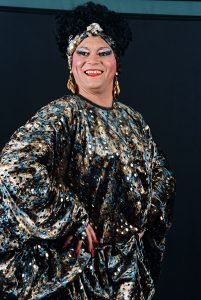
Brett: Well maybe Lips and Lashes, the the drag act that I photographed that was something totally different to me and Candy he was something totally different to me I’d never seen anything like that. I didn’t really- I wasn’t chasing too m- it was Lips and Lashes really in the Hull daily mail and Candy I think he might have been in the Hull daily mail- no, I think Daniel Meadows knew about him and ad mentioned him. I think he’d been photographed I think Russell might have actually photographed him and then I found him I thought I’ll do him at the tower I think Russell, so I knew Russell too, so
Kate: Yeah because Russell I think photographed him at the St George’s pub
Brett: Yeah I think he did. I think I’d seen those pictures, so I was trying to do something different.
Kate: So tell us about this picture
Brett: Well I’d suppose in this way. Why I like this is because it’s confrontational and sexual you see what I mean, it’s very different from- usually with a lot of these subjects you’re trying to, to have reality. I’ve done a lot of photographs of him doing his act but then this moment he he was like behaving like out like you know feminine way and sexual you see what I mean so so that’s what made the picture.
Kate: And tell us what’s in the picture so we can see.
Brett: Well it’s the stage of the Tower nightclub which is an old- it was an old cinema in Hull that they converted into a nice spot for concerts and for shows and I think this was quite early on when the Tower had just become. I used to go to the films at the Tower you see because I was a movie buff and then they changed it into a nightclub and then to a show place so this was an early, early like performance there. It was quite a big gig I think back then because it was quite a big place you know so and so I just went along and took the pictures really.
Kate: And this is one from a whole set?
Brett: Yeah there’d be about 36 photographs. Yeah I was having problems with the flash you see, so in all honesty this was the great picture because I got it right I was learning as I was going along and some of the photos weren’t very good so I was getting very upset about you this fucking flash keeps fucking up but it was me. I didn’t know what I was doing you know you blame your tools when you’re a bad workman, but I got the gist of it but I did prefer available light but in this case it was quite- it wasn’t- you couldn’t really do available light too well, so I used flash and it came out well and then.
Kate: I love that he’s looking almost, I think he’s looking directly at you.
Brett: Oh he is yeah yeah yeah he’s looking at me I’d met him already, so I’d had a chat with him
Kate: And the in side, in the wings we can see.
Brett: Yeah and he’s touching his hair and he- the other guys just touching his neck.
Kate: Or he’s smoking a fag?
Brett: Could be smoking a fag yeah he was saying they came out well yeah and then I’d done this print when I was on the foundation course because that’s when I took it in ‘83 I think it’d be and then the next year I went to Newport College I think well I did the fine art degree for a year and then I transferred so at the end of 84 September I went to Newport and they had an exhibition I think it was the end of 1984 called the young ones it was an open exhibition and it was open to anybody who was a photographer in Wales and so I put this picture in and it got picked by Sir Tom Hopkinson who was the picture editor of Picture Post and he was the judge and he picked four of my photographs and my friend Mike who was my friend at college they picked he picked four of his and in our year there was only the two of us got picked who entered it. The year above about five the winner was from this was the second year of the competition.
Kate: And how do you remember feeling about being picked?
Brett: I was over the moon and my mother, auntie Val and auntie Ann came from Hull to Newport to stop with me and they went to the exhibition and I took photographs of them with the photographs looking at them and with the photos they came with stiletto heels and it was very hilly was Wales, so we had to go to Cardiff and buy some flat shoes for them all because they’re having real problems getting up the hills. So we went for a darts the first night to a darts place and played they were into darts you see, so that this would be heaven for em, they all played darts so we had played a game of darts then I introduced them to this tattooist I knew who dressed up as a Cheyenne Indian and did events as a Cheyenne Indian and we went to one of his events and he asked mom if she wanted to stay for a curry, chicken curry and she’s decided not to go home till the day after so she stayed and ad a chicken curry with my friend and he named his son after me so we had such a good fun went to Pontins with him and photographed him dressed as a Cheyenne Indian at these wild west weekends so that was my bit of like English extre-extremism you know, so that’s what happened and I was over the moon about this photograph being in the first exhibition I was ever in.
Kate: So do you think you were attracted to these extreme or was it that they were just what you knew from this Hull life from this docklands life?
Brett: Some of it was just life going on and some of it yeah I’d looked at books and seen what people photograph and I thought people do seem to be interested in things that are a little bit unusual, so it’s best to try and find. How I did it, I juggled between everyday life and extremes you know like things that were a bit out of the ordinary so I’d do one out of the ordinary and one normal. so when the pub- the pub was later and so was Candy. When I first started I decided to do a, to photograph a place called Tudor Caff and Tudor Caff [check name 21:10] was in the market and in Tudor Caff it was full of young people so this was the the lady who ran it and this was the man this is a husband and wife team who ran it and it was in the indoor market next to the Holy Trinity and every weekend they’d be full of youngsters all skinheads and mods, so it was full of skinheads and mods and so this was life there in the Tudor caff and Idecided to do a comparative study with a normal cafe called Poppins which is in the town center and this is more your normal old people going for a cup of tea and this was your young people going for a cup of tea or a cup of coffee so you got the two differences you see what I mean, a young person’s coffee bar and or cafeteria and an older person’s one so we did this comparative study really and then from meeting the guys there they took me to the Warren and then the Warren I started photographing skinheads at the Warren you see who were quite tough you see that when I first saw them I thought I’d seen Made in Britain with Tim Roth on TV and I thought skinheads were basically national front types, so I was a bit nervous about confronting them because theres about 10 or 15 of them and when I first went to the Tudor caff but it turned out they were all nice kids and they were into ska like me, so they were into the Specials and stuff like that, so they were nice kids and this is ruling kids [name 22:45] sister Olga. I became friends with her and her other, other sister Ryna [check name 22:50] she’s in the exhibition both of them.
Kate: Do you know, do you ever see these people now?
Brett: I never see any of them actually, the only person I see is Olga I’ve never seen any of them.
Kate: So you were shocked by what you found out?
Brett: Well I was quite happy because I well I think at first I’d been looking at a guy called Homer Sykes he’d infiltrated the national front in the early 80s and I thought oh yeah they could be national front so I’ll infiltrate em but I was glad he weren’t really it was more much nicer.
Kate: And what was it about the Tudor caff? Why had they picked that place?
Brett: I don’t know I wouldn’t- it was in the center of town, you know near the Holy Trinity but I haven’t got a clue why they picked here, I wouldn’t have a clue, but so that was one of the first things I did you know the Tudor caff and Poppins comparative study sort of thing.
Kate: I was trying to see what’s on the menu
Brett: Can you enlarge it?
Kate: I’m just wondering whether I can…
Brett: I can see the prices 85 65 but I.. there might be another one with a menu on and then there was um did I bring both of them..
Kate: So it was, so was these were alternative cul- alternative groups of people- what how would you describe how you wouldn’t maybe have used that word at the time you were infiltrating what counter culture you
Brett: Yeah I think it was youth culture, yeah I think at the time I thought it might be something more sinister like the British front you know the national front, the BNP or y’know.
Kate: But then, but then now what I’m looking at is the wrestling.
Brett: This was a wrestling match, a friend at college said come along and these were some of the better ones of it he was um it was just an event you know my friend said come along it’s great I want a massive fan of wrestling but again I thought the subject could be interesting and it was you know, so we got these like wrestling pictures. This was at the city hall so they used to do the wrestling the city hall the same as this this is a T dance the city hall, but this is a bit later all these are from 82 to 84 this one’s 86 or 87 I think it was 86 so I said T dance at the city hall again so
Kate: So tell us how you were doing this, were you just wandering around with your camera or?
Brett: Yeah basically I used the college camera which is a Yashika and then a friend mark who was on the graphics course during the last year of a degree he said you should get your own camera and this is a really good camera and Olympus OM 2 so I went and bought an Olympus OM 2 but it showed me how to fire it off to make sure the shutter worked really fast and the shutter went straight as a body so I had to take it back and they said we ant got any more, but we can give you the earlier version with 10 pound off so I got an OM 1 and that’s what I shot everything with- an OM 1. That’s the camera I used throughout the 80s and into the 90s, same camera OM 1
Kate: What was happening in this one?
Brett: These are CND protesters I don’t know if I brought… oh yes there’s more pictures here, might be amongst this lot… forgot about that.. no I don’t think it is.
Kate: so what’s those you’ve got there?
Brett: This is the- these are good prints of the major general Nuttal well yeah that one was that was CND protesters I was on the bus this one here and they were out in the street and I jumped off the bus and photographed them protesting. The best picture is actually an arrest by the police with the woman screaming, but I haven’t got a print of that I thought I’d brought a little one of it, but it doesn’t seem to be about. I might have yeah so these were what I used to get into Newport once I got good at printing I reprinted everything on this standard print size this standard printing system and these were better prints you see these were like really quite good prints and this is the all of the major general Nuttall story where he courts the media, argues with the the press and then they knocked down his house. There he is having his chips and then he bit- there’s more pages he builds it back up out the rubble and then they knock it down again.
Kate: So tell us about this person?
Brett: Well this major general Nuttal Barry Nuttal, I suppose he- the Guardian put it down as he epitomized the British resolve of fighting back so what happened was the council were knocking down the houses to build a house industrial estate he refused to leave his house and he was he was involved in a military reenactment group and he was a major general he played in the reenactment group so he got all his people who were in this reenactment group to stand firm with him and he barricaded himself in and then the council came and the Sheriff of Hull arrived and gave him his eviction eviction order and then he said I’m not he ripped it up in front of him and so the media got really excited all the newspapers came and he was tending to a bit of a circus but then a week later they came and knocked the house down so that he wasn’t gonna stand with this he decided he was gonna fight on and he fought on for about three months- and now it’s an industrial estate near the Polar Bear down there.
Kate: and he’s… he’s made barricades?
Brett: Barricades everything yeah and..
Kate: So how did you come to be inside?
Brett: I was just cycling by- I got a bike I used to bike around looking for things and I was just biking by and I saw council thieving in big letters and I went jumped off my bike and took a picture of it and then there was these soldiers I thought took another one I said it’s like Northern Ireland so I went out to the soldiers what’s going on and he explained I said could I take some photos he said oh I’ll introduce it to Barry so I met Barry the major general and he said come in so I went up the ladder up into the house there was tons of people in there and they said we’re fighting back do you want to help us and I said oh of course I’ll help you and so this was the house you see and I went in there on a ladder and in and I’ve joined them in their fight against the council.
Kate: I love this one where the people are out of the window at the top as well and so how long were you there for? [30 min 37]
Brett: Well the duration really of the thing, about three months on and off so yeah.
Kate: And they’re dressed- someone looked like American soldiers some look like British army
Brett: They were supposed to be British army really, but some of some dress like Americans yeah that’s American isn’t yeah
Kate: Yeah and who were the kids in the photo?
Brett: Well they’re, they’re all their relatives and friends, quite a lot of them were like traveler types you know I think he was- George knows these relatives, so they are travelers some of them, so they were all family you know that came along so.
Kate: Beautiful prints.
Brett: Yeah they were nice weren’t they and then- I- the next thing I did after that.
Kate: Just did it- and what was it about his was it his fighting back that resonated or was it the working class thing or was it it was just another extreme thing to take a photograph of?
Brett: I think at the time it was the extreme thing, now I could say it was the working class thing because it’s the working class man fighting back for his rights but at the time I think it was the extreme thing and I just kept falling into these things I didn’t actually I didn’t read it in the paper anything I was just cycling by before it all started you know he said oh be here in a few days they’re coming you know I was in the house that it happened.
Kate: But it’s very it’s also of this area I mean it was.
Brett: Yeah it’s very much so it’s certainly it’s only around the corner from here really yeah.
Kate: A kind of alternative reality…
Brett: Yeah yeah I don’t think you’d find it anywhere else, but then in Wales I found Johnny T who dressed as a cheyanne Indian d’ya see what I mean and all his friends did too, so and they were a bit traveler too and they were all went it was a similar type of thing you know like with these with the military and then you had the Wild West and the native American Indian with my my friends I made in Wales so I did too like where they become the working class want to be something else to live a fantasy of something you know like militaryism or historical you know.
Kate: Drag?
Brett: Or drag that be the same thing wouldn’t it?
Kate: Or wrestling?
Brett: Wrestling the same thing yeah characters larger than life extremes yeah so they were all there really then I went and did this story which was the this one was the ambulance service.
Kate: Ohh I thought it was the blind institute you were going to show me..
Brett: Oh yeah wish I had I got in prints of that one
Kate: But you can still talk about it…
Brett: Oh yeah this that’s the head of the ambulance service and just one of the ambulance men I did three months with him – that came out nice and then this was the rugby you know.
Kate: So tell me what you did you went was this when you were a student or after?
Brett: This was when I went on to the Fine art degree you know like Russell had been on the Fine art degree and done documentary, so I went on there and I said to the guy Dave Sampole is it alright if I do documentary photography on here he said you’re free to do what you like Russell’s done it before you so I thought okay I’ll do it but I felt I mean it went well did this story but I felt with the Fine art degree that they didn’t seem there was no Daniel anymore so nobody knew what they were talking about, they were landscape photographers you see so I was like well I think I’m gonna have to change my thinking and one of my friends said well why do you transfer to Newport and follow Daniel.
Kate: So what was it about Daniel?
Brett: Well I think it was just that he’d done it before and so you could give you a hindsight into it and he was he was a he was all larger than life and he made life exciting just in terms of the way talked about pictures so this enthralled me and I think in some ways that motivated me to be a better photographer, having somebody who had already done it look at your work whereas with the landscape guys it was only if I was doing landscapes they were really good but they can’t do documentary so I think for me I needed people around me that would maybe better than me to make me I was a competitive person to make me try and be work harder and so when I went to Newport I excelled because there was lots of top photographers and I was competing with them you know
Kate: So what do you remember about Daniel in Hull? The experience of that and how he taught?
Brett: Well I didn’t see a lot of him I only saw him about three or four times but it was enough to be enthralled by just with the photographs the way that he explained stories the way he explained his life and the way that he talked about the social aspects of photography how you can say things about the world you’re in so I found that you know it helped me figure out what I was trying to do with the camera really.
Kate: And how and how did the photography start in your life was it had someone else taken photographs?
Brett: No it was by accident I didn’t want to be a photographer I wanted to be a filmmaker so I went on a foundation course because it said you- in the latter part of the foundation course you’ll have access to film cameras so I thought I’ll do it here can give me a bit time to mess about with a camera for the first time, well they didn’t have when it came to the point where we were free to do what you want I said and now can I have a film camera they said oh we haven’t got film cameras I went what well I only joined the course because of film cameras they said oh I’m sorry we haven’t got them they you know but I thought you had it on your prospectus so I was very angry they said oh all we’ve got is cameras and there’s a photo things that’s next the modular starts next week so thought oh I’ll do the photo module and that’s how I started. I want intending to do it but.
Kate: Then I guess then you met people?
Brett: Yeah I met I met these people well not at the college I was upset with them and I was very fiery so I decided it was a little bit like fuck you I got a camera and decided this is my way to escape the lot of you I’ll go wandering and just take photos then I went to the college that’s where I met Daniel and then I met Mark and Han were doing the graphics they knew Russell and there was a couple of Ross and Barry people at that so we met all them and they were all doing really good photography so I had just started and so I started hanging around with them and using the dark room facilities at the college when I went to the foundation course three months later they were about to throw me off the course you see because they hadn’t seen me for three months and then I said well do I get a chance to put a show up he said if you’ve got anything you haven’t been here, so I put a show up and he shook my hand he said in three months you become a really good photographer look at this stuff and so and these are the pictures that I put up and actually nobody’s ever seen them since then which was in 1983 so a lot of these pictures of well all of them none of them have ever been seen so these were some of the rugby pictures when the rugby when they won the cup the Hull FC and then these were more of the skinheads in the caff and at the Warren.
Kate: And I mean now do you see yourself in these photos?
Brett: Not really no I think people..I think they’re warm to me I had I had like George the theater of hate cut you see so I had a different haircut to these people they had skinhead cuts I was into theater of hate like George so I had like one of these theater of H things.
Kate: But I guess I mean more metaphorically.
Brett: Well I like the fact that they were individuals so that’s what drew me to youth culture. I was an individual so I did relate to people who were individuals, so I liked the idea of freedom so I was drawn to freedom but I also liked the idea of institutions because I’d been through the guys at the college they said well come to our all our lectures Brett nobody will know you know you’re not one of us so instead of being at the foundation I was at the degree with the degree students the third year degree students going to all their lectures and film shows and visiting artists so I just go in with them and nobody’d say anything so they were quite happy when we just going in so there’s a series of Fred Wiseman documentaries who was an American documentary maker who had filmed institutions he’d done the military he’d done Boston [no idea? 40 mins] and stuff like that and this is what started me thinking about photographing institutions that’s why I did the ambulance service because of Frederick Wiseman because I’d seen these documentaries and I thought I should do an institution and that’s what made me do the ambulance service
Kate: And and the blind institute?
Brett: No that was because on the Fine art degree there was I’m… I paired up with a guy called Mario who wanted to be a filmmaker and I still wanted to be a filmmaker but Mario was an Indian guy or British Indian and he wanted to make movies and we both into making movies and we said why don’t we do a couple of documentaries together so I mentioned I’ve been doing the fish filletors should we do a documentary about them and he said oh that would be great and he said and can we do the blind institute too on Beverly Road and I said oh that’d be great so it was his idea to do the blind institute I mentioned the fish filletors because I done the fish filletors and so we went back to the fish filletors and I filmed this time I was the film man he was the sound man and he did the interviews and I did the filming and we did a documentary about the blind institute and a documentary about the fish filleting but I’ve never seen them because I transferred but he yelled me out he wrote me a letter and said could you print some of the black and white photos you took for my degree show tell me and he sent me about 100 pound he wanted about 40 prints it came in really handy you know when I needed money so and the students well you did this before you came here I said oh yeah well this is what you passed the course with and I’d already done it so I go so.
Kate: So what so coming back to well I guess it’s a conversation about Newport and Daniel and all of those things that…
Brett: Well Newport was a different ball game. Newport was like it was up in the level of being really even in Hull it had been quite competitive but once you got to Newport it was like going to the Oxford or Cambridge for photo journalism really was a high standard and I suppose you either sank or swim or sink with that type of stuff so I went for it you know I was very busy but it was very good you know so yeah it was so the level I suppose in Hull it had been quite- through Daniel- it was quite a high standard but you got to Newport it was yeah it went up it really did and so it was it was really good at Newport.
Kate: So for the- I mean there was you and Ross’s Hull didn’t quite catch this? 42:40] do you know what I mean these people that
Brett: Yeah there were Ross was here so I met him and we became friends Barry was here we came friends with him they were the two two guys besides my graphic designers the graphic designers well strangely enough Mark was the guy I first met he never became a photographer but he was a brilliant photographer he was really like Tony Ray Jones people like that he was the person who led me to Tony Ray Jones and he was a brilliant photographer but he decided to do self portraits of himself artistic stuff on a graphic course well Russell had been able to do documentary on a Fine art course and pass but they failed him on a graphic course doing nude self portraits so he didn’t get anywhere but he influenced me a lot in my thinking with what was talking about?
Kate: Tony Ray Jones.
Brett: Yeah he led me to Tony Ray Jones and people like that and he couldn’t believe that I started taking these really great photos really early on like Russell but I suppose I determined even though the technical stuff was defeating me I was determined to try and do well at this and so now and again he came right.
Kate: And and what are those two?
Brett: These are later ones these are from E.P. 7 88 and this is Rumi who is the daughter of two of my friends and this is Nimrod Lamonti and I know the family it was a family the two sisters and three brothers and they live just off Hessle road and they’re from Ghana. Nimrod moved back to Africa but his sisters moved to London and there’s only the mother up here now. The oldest brother was there he had a pirate radio station Reggae Pirate radio station and one of the council flats at the front here and he got busted by the police because in the 80s the licensing for radio was becoming extremely expensive so a lot of Jamaican communities started doing pirate radio stations and it took off in London went to the Midlands and filtered to here actually via Leeds. He was the only one so his brother had a pirate radio station but he got fined so they found out about him and they found him.
Kate: And where was this taken?
Brett: That was in Pearson Park in the Indoors menagerie thing, so he decided to wear a traditional costume for the photo it came out nice actually yeah.
Kate: So after the street photography you then…
Brett: Well I you see..
Kate: Well then chair [46:20 ish] it didn’t became less street or well talk about let’s I just need to ask about Lips and Lashes while you’re in this time there was the Lips and Lashes stuff
Brett: Yeah that one was I just can’t we were doing I know I’d come home from college for the summer holidays or the winter holidays and I just saw them in the paper and thought it’d make a good story the same with the body builders so I was doing them for the college it was a three-picture story that’s what it was we were doing three picture stories so it must have been the summer and so I did above a three-picture stories for the college the body builders and Lipss and Lashes I found out about them both through the Hull daily mail
Kate: So in the paper, what they were just adverts for what was on I guess?
Brett: Yeah I think it was adverts they had a what’s on section you know like a what’s on and they named the clubs what was on so that’s what I did I’d been doing that in Newport looking- trailing through the newspapers for stuff and they’d said you know things like that are very good for pictures look in the papers and see.
Kate: Did anybody ever ask you did you just go and buy a ticket or did you just turn up and say I’m a photographer.
Brett: I used to… I don’t think I ever bought a ticket for anything actually even with the gigs I think the first gig I bought a ticket for Lloyd called and the commotions but I only bought one and after that all their other gigs I was on the guest list and every band I did I was on I was part of the band and so I never paid to go to a concert throughout the 80s.
Kate: But like the stuff at The tower, the wrestlers and Bobby.
Brett: Well the wrestlers and Bobby I think we just said we were students and we got in free, we usually asked the management or the act usually if it was the act the act had asked the management to make sure and that was it you got in saying you was a student was like a gold card but so you just say you’re a student and that was it you was in, but with the concerts I don’t know whether it was exactly like that you know I remember with zig-zig sputnik I’d gone to talk they were in the newspapers like they’d done the same thing as the Sex Pistols they’ve got real big publicity I think he’d glass somebody the lead singer and it was all over the papers that week and so I went to the concert and he wore like a wrestlers mask like one of those Mexican masks yeah and I saw him I said excuse me would you be alright to photograph the concert and he went fuck off so I chased after him I said don’t be saying that to me you cunt, I was really aggressive back then so and he flew off he ran for his life and then I thought well what do I do so I stood around I thought well they’re bound to throw me out and nobody did so I just stood there and waited and then I photographed the gig but I didn’t ask permission in fact I was thinking of filling him in. So so it won’t always the case but mostly the student thing you got like the wrestling that I went with my friend Mike in Bristol we just mentioned we were students and we were in
Kate: But stuff at the tower for example which I mean did they just get you was it just you or was there other people taking photos?
Brett: Well with the wrestling there was Mark with me and I had actually the photo that one that real like expressionistic one the film got caught in the it was with the college camera and the film got caught I was trying to move it on and it was breaking all the sides and I still the exposures weren’t coming out right it was a disaster but I managed to get this German expressionist picture from a disaster I was like what’s going on you know it was the first time I had a real big technical glitch but Mark was with me with that and when I did the wrestling in Newport which was in Bristol my friend Mike who became one of the world’s top sports photographers he went with me and at the end of the night he said go ahead and take a photograph of a giant haystack who was this wrestler, he was gigantic like a villain in a Bond movie or something so I ran backstage and started chasing after him and said excuse me can I take a photograph he turned around and started chasing me roaring at me, Raaaah, so I ran for my life I ran out of the backstage saying oh please don’t make him come out chasing me and then Mike said how did you get on I said oh he wasn’t interested I didn’t tell him he’d been chasing me so I was full of fun.
Kate: I think what’s curious about all the things that you took I mean it is all working class I mean they were working class sports weren’t they.
Brett: Yeah they were working class sports in the end what my granddad liked which was horse racing and rugby league I ended up photographing a lot yeah wasn’t my intention to, Mike got me the racing with the Grand National and he got me the rugby book because he couldn’t do it but he did the best selling rugby book on rugby league and with about six or seven years later it was the centenary of the game so they decided to do a sequel well he was committed with the Guardian to doing football so they asked me to do through his recommendation I want a sports photographer but I could do really good documentary photos and so I did the book with my dad being a rugby league player I put him in the book when it was a literary theme to the book and they had the guy from Hull called Alan Plater he rode Zed cars and he lived in Hull and he said I’m gonna write an article about Johnny Whiteley and so the guy who’s doing the book Ian Clayton he rung me up he said can you get Johnny Whiteley and I said oh of course I can he’s friends with my dad they’ve known each other since they were 11 I can’t put my dad in he said oh of course yeah so I took em both for a beer in the rugby and put him in the book so actually that’s my favorite picture in the book my dad and Johnny Whiteley having a beer together reminiscing that they wanted for this piece by Alan Plater, but I would say that there was a shift of it you see I started from a fine art background and I started doing art photography then I moved the documentary then when I got to Newport and they were saying oh you’re great at documentary I decided I was gonna be the new David Bailey so it all went out the window did the documentary I started doing pop stars and
Kate: Why did you want to change?
Brett: I’m not sure I’m just one of these people that likes to change you know I get I think well I’ve done it and move on I’d see like an artistic thing rather than a formula business thing where you think
Kate: Oh I could become a?
Brett: Yeah I can do this for a living I’d already moved on artistically and so I decided to do portraits of film directors because I was into movies you see so I started photographing all the film directors from the 60s to the present day of the time the 80s. I think about 14 film directors
Kate: And then have you been taking photographs ever since… at all you know like so you kept you photographed I mean at the end of the course.
Brett: Well what happened really is the after the course finished if you look at it I’ve been trying to put together my history and if you look at like that period with Newport if you look at the Newport period well Hull you go Hull College and then I went to Newport that was like four years it was 1982 to 6 when I finished if had been in London and it probably got a lot work but to tell you the truth Kate, I was living a bit of an alternative lifestyle really so I was taking a lot of drugs and I did a few too many drugs and I decided that I didn’t want to do photography anymore so I stopped photography in ‘86 1986 and when I came back in it I was much more interested in religion and so I wanted to photograph Rastafaray so I did Aswad [Not sure 55:30] a Reggae band so I photographed a year in the life of Aswad [is this how you spell it?] who were Reggae band I did that in 1988 that didn’t really come to flui- I was trying to do something similar to Penny Smith who done a book on the Clash that was really well received but nobody had ever done a book like this on Reggae. Bob Marley had had some good stuff done but they hadn’t done a book like the Clash, so I was trying to do this with them with a similar thing to the Clash book thing come off in the end and I packed in photography again went on a bender this time for two years but that I met some musicians and when Reggae and I’d stopped taking smoking cannabis I decided I needed to stop smoking cannabis I’d been smoking cannabis for about eight years non-stop so like I’d had a good time with the Reggae so it wasn’t like it was a stigma and it was nice to be with people who did the same thing as you but then I stopped and I did a tour with well I moved in with a hairdresser and his brother who was a pop star well he is a pop star but sort of in a band you know like and so I started doing pictures for them in 1991 when I came back at it. They lived on the marina. I moved in with them in the marina and through them I went to New York and photographed New York in 1991. Went inside a prison in New York and photographed life inside an American prison and they’re
Kate: Terrifying?
Brett: Well the guy yeah it was different you see because I went to see the D.A. the the district attorney in New York and asked if I could do this he said well we got two things we can get you we’ll ring you in the week and tell you there’s a women’s prison or a prison on Staten Island. In the end we went for Staten Island I had no idea what I was letting myself in for went to the prison it wasn’t a normal prison it was all black so it was an all-black prison well my thing is black culture so the Italian guy that was taking us around he said we’re gonna have free movement there’s gonna be three to four thousand prisoners walk through they’ll get nervous so I was like well nah I’m okay man I’m not really frightened of anything so and I smoke so I went into one of the prisoners and said you got a light and he lit me up with a cigarette. I had a suit on you see and a tie because I was told them I was from the Guardian well I wasn’t I was pretending to be from the Guardian to get into the prison so I had to look the part and I was so if they asked for the press pass were fucked but they didn’t they just let us in. We just went through this you know like the like an airport thing nobody checked anything we went through I took my two friends with me that I was stopping me from Hull, the singer with the band and his friend and well three of us just went around the prison but it was good that I had them with me because they could take the stories while I took the photos because we only had a day in the prison and we found out that there was a program called staying out and with this program it was a woman called Sonia Page she put together a prison reform bill where prisoners were allowed to be on their own in a like a pyramid system if they joined this program they could start out as a cleaner but end up doing a degree and so and people did it because the success rate was incredible they got degrees and when they left 93% didn’t come back whereas most offenders in New York is the opposite they mostly come back so this she was a baptist lady black baptist lady and she put together this this program for helping the prisoners so I photographed that I thought wow and my friends took the notes on the prisoners what they’d done and why they were in there. I tried to sell it to the Guardian and they didn’t didn’t take it so was a bit gutted about that but it was just one of them things so but it was an interesting thing you know to do and meet all these black prisoners nice people. There was a rasta man in there so I told him I’d photographed being in spear he shook my hand he was like man that’s fantastic you know you photographed being in spear [Not sure? 1hr 30 sec] man you know so it was good you know.
Kate: And then after this you went you
Brett: Well after that 1992 I moved in with a girl called Debbie in Beverly strange enough, my grandad when I was about eight well maybe a bit younger- six we were watching the TV because we used to stop with him and he was getting on a bit we were watching the TV and he looked at this we were watching National Velvet or International Velvet with Elizabeth Taylor as a little girl and he said you will end up with a girl that looks like her and I was like okay grandad he said no honestly you will and strangely enough I did so in 92 I moved in with a girl who looked like Elizabeth Taylor
Kate: In Beverly.
Brett: In Beverly yeah.
Kate: Was there a horse?
Brett: Yeah well she was a… she trained… she was a stable girl so she was really horsey yeah she was from Withernsea originally but yeah so and that…
Kate: So you’ve told me about printing that you’ve got into printing photographs was that much later?
Brett: That was much later you see even now with Debbie in Beverly and then 1993 I moved to Spring Bank it was when I got to Spring Bank that we started thinking I think I need to improve the printing and then 1994 well I met.. late 1993 I was hanging around with a guy called Paul he was a rock bass player in a band called Rich Rags they were named after a shop on Anlaby Road called Rich Rags I became friends with the people there too, the Indian guy but I was hanging round with Paul and living a bit of a rock and roll lifestyle after leaving Debbie he was friends with Debbie and he introduced me to Rich and Rich ran Sheridan’s which was near Rich Rags and was a record and bookshop aimed at students and I got on with Rich real quickly I thought I like Rich and he introduced me to Tim and Kerry and Tim was the lead singer in Rich’s band and Kerry was his girlfriend. Kerry was she’d been an actress that she was an artist and she was also moving into a holistic medicine so and she Kerry was her family lived out in the country so she said oh you must come meet my family so I went with them on a country trip to the countryside and they lived in a big mansion the family in Lonsborough [1 hour 3 min 30 sec] and they had their own home brew wine and it was incredible. I would be dancing the Charleston with the mother because I knew how to do the Charleston and we were having a great time and they said you’ve got to come anytime you like Brett you’re part of the family, so I started living in this mansion in the country you see so with this incredible wine that they were brewing and walking the dog and taking photographs you see so I started photographing the estate. Well the estate was this big house was actually the servants house this mansion we were in next door was the Duke of Lonsborough’s mansion that had been knocked down because he couldn’t afford to pay the window tax and it was a measy mansion in the mid all outgrown and knocked down and derelict and there was a pineapple steps so I started photographing all this and then they said you’ve got to meet my cousins husband he’s a photographer and a top printer in London, he prints for Gerard Mankowitz and Arnold Newman and people like that, I said okay so I met Adrian and he said we should have an exhibition Brett, I said yeah we should man you know you you’re walking your dog and I’m walking their dog yeah so he said yeah we’ll have an exhibition so Mike my friend who was the sports photographer he done so well out of sports photography he got the job Eamon McCabe’s job at the Guardian at the age of 18 and became their star photographer so by the 90s when I hooked up with him again he’d bought a country house in Hebden Bridge so he said oh come on and stay with us in Hebden Bridge so I said okay I’ll come and stop so he lived in this cottage in Hebden Bridge and… wandering around the town I discovered there was a gallery so I went into the gallery and there was like a guy look like he was in Hawkwind [1 hour 5 miin 35 sec] with a big beard and everything and I said man you know is there any chance of us having an exhibition of photographs? He said well you pay a 35 pound a week I said well we could book it for a month me and my friend and have a month he said okay yeah yeah why not so I told Adrian he said oh that will be fantastic so we giving the money we went and down and I looked around and everything and sorted it all out and then we had the exhibition and Maggie Hambling sent me a postcard wishing me good luck, so like because I’d photographed her the year before because my mum had said there’s a woman with the same name as us and she’s an artist I said oh I know about it why don’t you photograph her and ask her if we’re relatives I said okay mum so I wrote to her and said you know…
Kate: Me mum says…
Brett: I know mum had forced me into this but she turned out to be rather nice I had quite a lot of laugh with her you know she was fun I was feeling a bit embarrassed about it all at first it was like bloody hell I’ve been forced into this but she turned out to be nice you know nice and she she was for my stuff so she sort of like sent me a postcard so he was like is this Maggie Hambling the artist I was like yeah it is yeah she could be a relative he was like wow man and then Adrian got a piece in the Observer of his work of the exhibition so they got more publicity from us than anybody they’d ever had because Adrian was the top printer in the country you see of photographs. So like so that that happened in 93… 94 and then the film director’s side through the rugby book I got the money a bit of money through doing this rugby book I only got paid 57 pound a day the book sold over a million copies 10 pound a copy so they’ve made at least 10 million well they’ll be the tax… about six million I got paid 2,500 pounds and… but it was the most money I’d ever made so I thought oh well I’ll go to Ireland to finish my Irish project off with one of my friend Jamie who’s gonna be in the exhibition in 93 and the DJ guy I know who moved to Liverpool and so he came with me to to Ireland and with the rest of the money I decided to reprint the film directors and have a film director exhibition at the library screen so I did that Alex Cox came to he sold them so I photographed Alex Cox and then they were rather good I printed them really well so they looked really nice so and it was again film year it was 10 years later when I’d done him it was British film year and then they were having another anniversary 10 years later and this exhibition was named so I took a Bradford Museum of TV they had it in now their cinema too so that’s what happened there.
Kate: What does your mum think now to the photography when she sees these pictures?
Brett: She don’t really say much really I don’t think it was their thing you see so they went really… mother came to the first exhibition dad came to the second one the one of the film directors so they only went to two exhibitions but it wasn’t really their thing they were very sports oriented so they were into sport. I think in the end dad said I think he was possibly being honest about it said you’re doing you’re wasting your time with that stuff. It’s a rich man’s game and you ain’t rich so I think in some ways he may have been right but I had invested every penny I had for 20 years in it and I’d got nowhere and so I closed the darkroom and decided to pack it in in 2002 and I didn’t take another photo. I would get interested in photography because they did other things for a decade and then my mother wanted a camera to document our little holidays I was taking her on and I thought this would be fatal if I get a camera because if you’re an addict of anything even a little camera I’m gonna get addicted well I did with this little camera I shot over 3,000 photographs with a little camera and I was getting…
Kate: On to film?
Brett: No digital, digital yeah a real little digital camera just the idea of it and it started costing me a fortune and I thought oh no, I get them done from boots two copies there were 80p a shot and strangely enough the cards that they were on started going faulty so the only things I’ve got are the prints and I spent about thousands of pounds on this shit then I thought what you doing Brett? My friends said buy a camera, buy a proper camera and record all your black and white stuff so that’s when I bought the proper camera because I think from 2016 to 2018 I shot with this little camera actually I bought three the third one was quite good at an exhibition of Brixton with the little camera photos I’d take it with a little camera they were that good people like them so but I think it was a bit misguided really but I knew I thought oh no why did I start but then we got the big camera and I started doing the same thing again everything I’d photographed with a little camera I photographed with the big camera and that’s where we’re at really so
Kate: So what are you photographing nowadays do you still look in the back of the mail?
Brett: No nothing like that. I think for me… really the Brixton project took off. When I got the camera COVID happened so I couldn’t travel and I had this new camera so I did a project on Hull just wandering around because I couldn’t go anywhere but I wanted to photograph London and then I went to Brixton started photographing Brixton but for a year photographed Hull because I could. There was nothing I could do but the project I wanted to do was in Brixton so I finally got to Brixton and got that started and then that took off and I think it took about four years… four years it’s taken to get that body of work together the Brixton thing and… I think in some ways I don’t know I’ve been trying to do a few things but it’s not it’s not I’ve retired or anything it’s just that I do other things really I think.
Kate: But does the stuff that you remember from Daniel like those really early influences. Are they still very present in how you take photographs?
Brett: Well strangely enough I think from when I was young I always like being influenced but they came a point when it was but after college I think during college I was influenced by photographers but after college as one of maybe being influenced by Penny Smith and Adrian Boo with the Aswell project [1 hour 13 min 20 sec] but then when we went to New York well I had a vague recollection about some photographers who’d photographed New York with real grainy stuff I thought I think is in the 1950s well I up the film a little bit and do some grainy pictures I couldn’t remember who it was but it was Klein and Frank but I couldn’t remember who it was so they had influenced me a little bit on that one what happened next in the 90s was that I started to do my own thing and also I started experimenting with a red filter so I started using a red filter which worked really well if you had sunshine so when I went to Applebee [1 hour 14 min 10 sec] we had sunlight and I was shooting a red filter with that. So why are the skies are so weird and the pictures look different is because I’m using a filter you see. I mean it was quite odd in some ways I mean most people wouldn’t have been able to deal with it because if the light disappeared if it wasn’t sunny like that you could hardly see anything you just saw red with little figures, bits, but I was so used to taking photographs it didn’t hinder me in fact it was a challenge so I quite liked this challenge with this red filter because the effects you got were incredible so so I started using the red filter and then I think I closed the darkroom in 2002 and then for four years I did self portraits so I’d been in a book called Naked London in 1986 through a friend of mine Adrian Woodhouse who was the theatre critic for the Evening Standard and he put the book idea together and then he wanted me to do- be in it and I said can I photograph the girl who’s taking the pictures she decided she didn’t want to be photographed but I’d already been photographed so I’m in it photographing myself and I’d always though how does an artist finish they’re sometimes finished by doing themselves so I decided to do self portraits. Well it started out normal self portraits but it ended up we made painting myself red wearing African masks wearing angels wings buying guns and putting guns to my head all sorts of strange imagery and I did that for about four years and then I packed in photography. That was it really. And then we’ve come back at it and one thing I didn’t do very well was colour photography I’d done everything black and white so I decided we’d try to do colour photography so that’s what I’ve been doing this like colour photography thing and brace is [1 hour 16 20 sec] quite colourful and get quite a lot for Caribbean people there, there’s a lot of colour so it was good for a colour photography or as a career really I’d started black and white and it was 20 years of black and white really that I did with the darkroom doing everything myself
Kate: And when you look back at the photographs here, Nimrod or Candy or what do you… yeah I mean when you look back what do you think when you look back at these photographs how does it make you feel or what are you thinking when you see these photos?
Brett: I’m not sure actually what I think is if the photograph affects the viewer in some way in terms of pleasure or thought then I’m happy, a bit like a musician makes music to give pleasure. My own thoughts on it is sometimes I’m a bit like I wish I’d taken more photographs like we should done this we should done that only now and again did it come good so I found at first photography frustrating and then the more stoned I got the less I was into taking photos actually. I’d gathered I don’t think this is what I should be doing and I was hanging around with musicians and I preferred talking to musicians about music so I’d be in a studio with the Wegal papa rappers [spelling] and we’d been smoking and then they said the producers from America is a hip-hop guy, but he’s really not into drugs I said well we’re gonna get real high, but we went in I knew he knew I was high but I started asking him when you producing what’s this do and what’s that do and all of sudden we were off on the technical thing and he was showing me how to be a music producer he turned out to be called Terry Riley and he’s in Black Street and he got a BT award lifetime achievement award he invented New Jack which is an American type of music and he’s a massive star in America, he even did Michael Jackson production for him this was right at the beginning of his career so like so I was much more into music it was fatal to get stolen because that was it, I was into the music you see I mean I was thinking about it today I had an opportunity I was met Dennis Brown with one of my rasta friends and I took some average photos of him. I wish I’d grabbed him took him outside and did some great pictures but I was too busy chasing the ganja I wanted some sense of media [1 hour 19] so so I didn’t get… I got one nice picture of Dennis Brown but I didn’t, it want like I was thinking the big break for Dennis Morris who is in the media at the moment he got a break with Bob Marley well Dennis Brown was the crown prince of Reggae, he was the second to Bob Marley in the history of Reggae and I had an opportunity with him and I didn’t make the most of it.
Kate: But it sounds like what you’re talking about is regret.
Brett: Yeah I think I was regretful about that really, but you can’t have regrets really but I was regretful about that, but I was only 20 you know what I mean and you know you’re discovering a new world, all these friends, you’re into drink and cannabis you know so other things are on your mind.
Kate: And also I guess you’re yeah I mean I’m always curious about how do we people that are very well connected or come from very particular families or very particular backgrounds you know it’s like you said your dad was..
Brett: Yeah he was thinking that I was wasting my money yeah time I mean I’m glad I did it I think but it was expensive you see coming from the background I was in mum and dad had to supply Newport when I went to Newport. Hull College it was very laid back it was a Fine art degree course they weren’t really like, you wasn’t gonna get in debt whereas at Newport they told us when we started the course this is very intensive what you’re gonna be doing you’re gonna be £2,500 in debt at the end of the course well the grant was £1,500 for a year so you imagine being told that you’re gonna be that much in debt. I was that much in debt because it was so expensive to do you see what I mean but I decided I think I’m going for it I want to be famous I want to be a top star of this so you just got to shoot and shoot and shoot and so that’s what I did. So I didn’t really think about the money I thought well it’ll come back but I don’t know I think maybe it may have come back to me if I’d have been taken a normal course but I didn’t I went off the track a bit so but yeah I think there went if you think about photography this type of photography or any type of photography it is a middle class demean the.. really the thing most of them well I think the 60s did wonders for it but it didn’t really become it’s a bit like pop music if you look at pop music today quite a lot of the pop stars are middle class it’s gone back and it’s the same with photography a lot of photographers are middle class there was this hope that working class you know superstars would happen and it did in the 60s and into the 70s and even in the 80s I was thinking well I’m gonna be a working class superstar you know that’s what I’m gonna do but you realise that as the people you were meeting were not working class it was a different stratosphere really. I had no problems with it I like rich people a lot of rich people I met they were a bit eccentric and I was a bit crazy myself so I had a lot of fun with rich people so so becoming friends with Angus McBean [1 hour 22 50sec] you know people like that, they were nice people to me you know so and they were supportive about what I was doing… and I think in some ways I had a lot of people rooting for me and the red carpet was out in some ways people were very much always from a working class background lots of people helped me but I think I was my own worst enemy in some ways you know when I did a lot of drugs and decided I didn’t want to do photography. I didn’t know what I wanted to do I just went off on a different tangent. I had a few problems you know and so it’s been a bit of a up and down road but I think when I looked at all these photographers that I wanted to be like. I think 40 years later I’ve done it even if it was an up and down road. I did it. I did what they did it so I can’t really complain about that in terms of a legacy I go well yeah I did I did something well you know and it considering the environment I was in I didn’t want like all these other photographers who got work I lived hand to mouth I was mostly on the door doing this, so like I had to adapt my life to it so I didn’t have a family or anything I just thought I’m gonna be great at photography and in some ways that’s sort of what happened but it was expensive but uh but it’s what I did but then I afterwards I decided well I think I can do other things better so when I stopped I started doing art, poetry, songs all sorts of things that I thought I could do better than photography because I knew I’d sort of finished you know it felt like I’d finished in 2002 really that I had done 20 years of black and white photography and I’d achieved what I wanted to do so so what I’ve done recently and there is some great stuff it’s more like it was an afterfall you know like could there be a great colour photographer too and then that’s become a bit more difficult than it’s not as easy you’ve got to go out on sunny days you see what I mean with black and white you can go out anytime with this you got to go out on the sunny days so you you know you with the colour because you’re not gonna get the saturation well this country isn’t very sunny so you sat about you know shit it’s colour dependent you know so and I think I’d fallen in love with black and white actually so as a medium it seemed to captivate me a lot as both a social and an artistic thing so but now there’s been a backlash against it you know like a lot of people say black and white was overrated I don’t believe that but it was for over a hundred years it had dominance within photography so it is the dominant force in the history of photography. Colour is a new a new thing but it’s taken over really you know most people yeah everything’s colour today phones you name it we’re all colour orientated so you don’t see as much black and white there’s some people lovey like an elite like you’d say people were into vinyl today you know but but mostly colours taken taken over so it was strange me thinking I should be a colour photographer at a time where colour rules… well actually strangely enough black and white’s made a bit of a comeback but I’m never gonna do black and white again I’m something from the past now although I did if you think about it the era of black and white finished in about 94 that’s when the industry decided black and white is dying so there was articles saying black and white is dead in 1994 well I continued for another eight years just saying I’m gonna continue doing black and white it’s what I like doing it’s all I know how to do. So it took- you see I mean my friend Adrian did it till the end of his career and until he stopped last last year I think he was photographed a hundred year old guy in Donnie Gull [1 hour 27 44 sec] only two years ago in black and white on 120 on his Roliflex so they go…
Kate: Why not tackle colour?
Brett: Yeah so I decided to tackle colour and it’s been a bit harder than I was expecting. Colour is a different thing altogether black and white I seemed to warm to it and understand it quite early on. Took a couple of years but once I got into it it was the it was the way I could speak you know it always I could I added my own voice with it colours been a lot harder to do actually but I think you know if you saw some of the colour that we’ve been doing even the stuff down Hessle road Alex Gill like the recent stuff I put out we’ve been doing some down Hessle road over the last three years and there’s some nice shots but I think we’ll put them out first in black and white but then I decided to put them out in colour because that’s what I’m doing really so. I think some of them do work you know, so that’s been about it but there was a jump from art photography to documentary to portraiture to art photography again via portraiture and music but then I ended with self portraits so there’s a lot of different genres I took on board rather than most photographers- that fly can you see it- most photographers find a formula and stick to one thing I couldn’t stay still but I think it was the artistic temperament even with art I can’t stay still I’m always jumping around I want to do somethin new, so I can’t stay with one thing, so I’ve done quite a lot of different things so some people think that the formula is a better idea you know you’ve got a theme running through but I tended to- I’ve got like I’ve got a lot of documentary but I got a lot of art and portraits so there’s a- Ah before there was also what I did was I found up some of these now that’s the one we were working towards this is the one where it can be exhibiting.
Kate: Shall I turn this off?
Brett: Yeah we can finish with that this so these I found some other